The problem
Damp mornings let mildew and algae grow on shady concrete. Oil and barbecue grease stain patios.
The fix
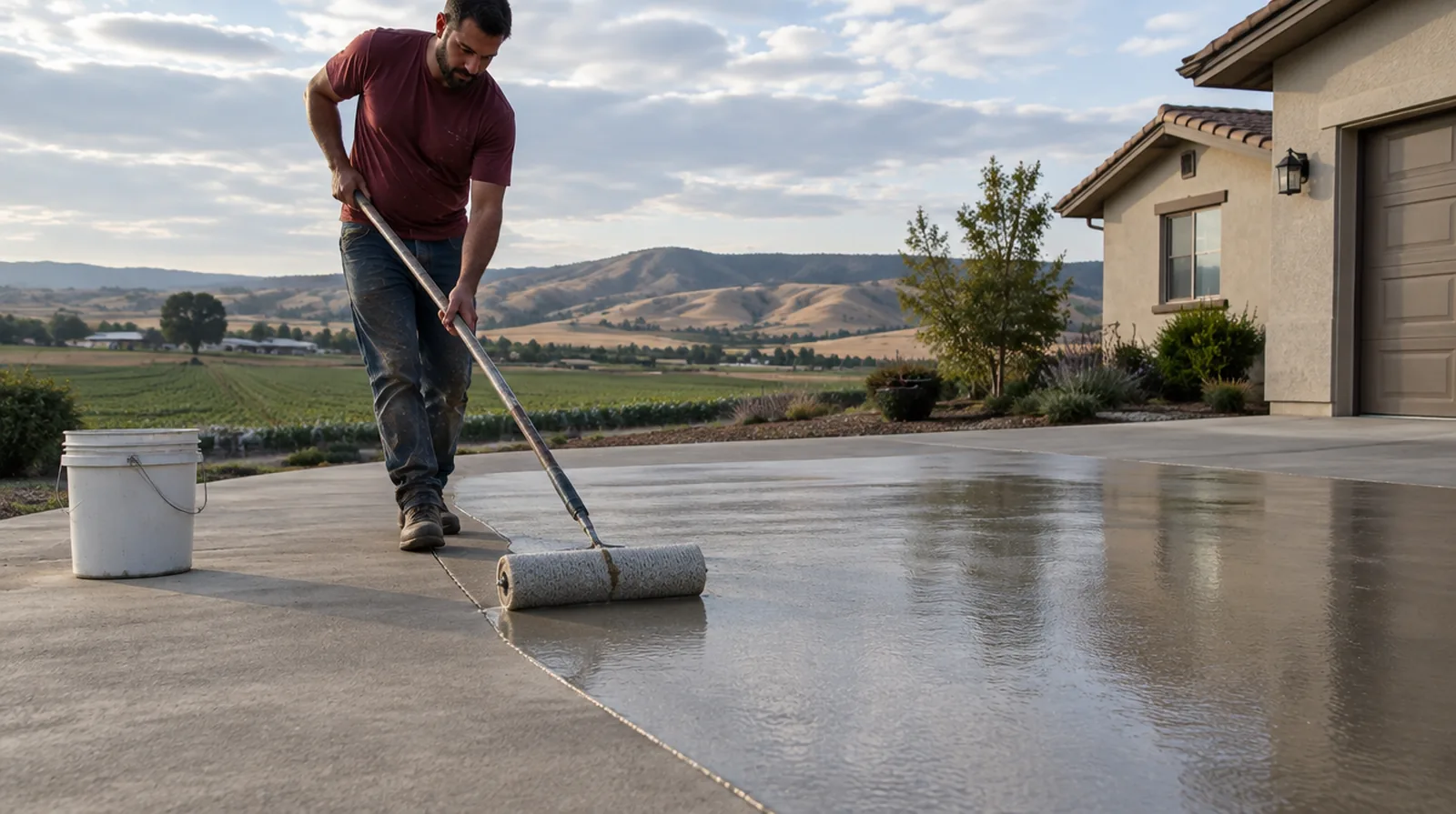
Clean, treat and seal with a breathable product.
How often?
Every few years.
Slippery?
Not with penetrating sealers.
Barbecue patios
Tri-tip nights leave grease on patio concrete. Sealed concrete lets you clean it with soap and water before it soaks in.
Shady walks
North-facing walks stay damp and grow green film. We clean them and apply a sealer with a mildew-resistant additive.
Ranch concrete
Equipment pads and barn aprons can be sealed too, which slows water and fertilizer absorption.
Concrete sealing in Santa Maria, explained plainly
Exposed concrete here takes a mix of coastal moisture, strong sun and sprinkler overspray. Unsealed slabs soak up water and oil, grow green film in shady spots and go chalky where sun hits all day. Sealing is a fairly quick job that slows all of that down. It does not change the color much with a penetrating product, though an acrylic sealer can add a light sheen and darken the surface a little if you want a wet look.
What a sealing day involves
We clean the surface first, which usually means a pressure wash and a degreaser on stains. Concrete has to be dry before sealing, so after washing we give it time. Then we apply the sealer with sprayers and rollers, watching for puddles and drips. Most people can walk on it the same day and drive on it after the time listed on the product, which we write down for you.
Homeowner questions
Will sealing stop sprinkler stains? It helps water bead instead of soaking in, which slows the hard-water marks. Pointing heads away from the slab helps even more.
Can you seal stamped concrete by the pool? Yes. We can add a fine grit to keep it from getting slick around wet feet.
Does a sealer fill cracks? No. We can fill cracks separately before sealing, but the sealer itself is a protective film or penetrant, not a filler.
What about tire marks? Hot tires can lift some sealers. We choose products rated for driveways where cars park.
Driveways near the fields
Homes on the edge of town often see tractor dust, mud and fertilizer drift settling on driveways and walks. A sealed surface rinses clean far more easily and resists the dark staining that soil and irrigation water leave behind. We recommend washing first, then sealing when the concrete is fully dry, usually during a stretch of calm, dry weather. Reapplication timing depends on sun exposure and traffic, and we will tell you what to watch for.
Long rural driveways and turnarounds
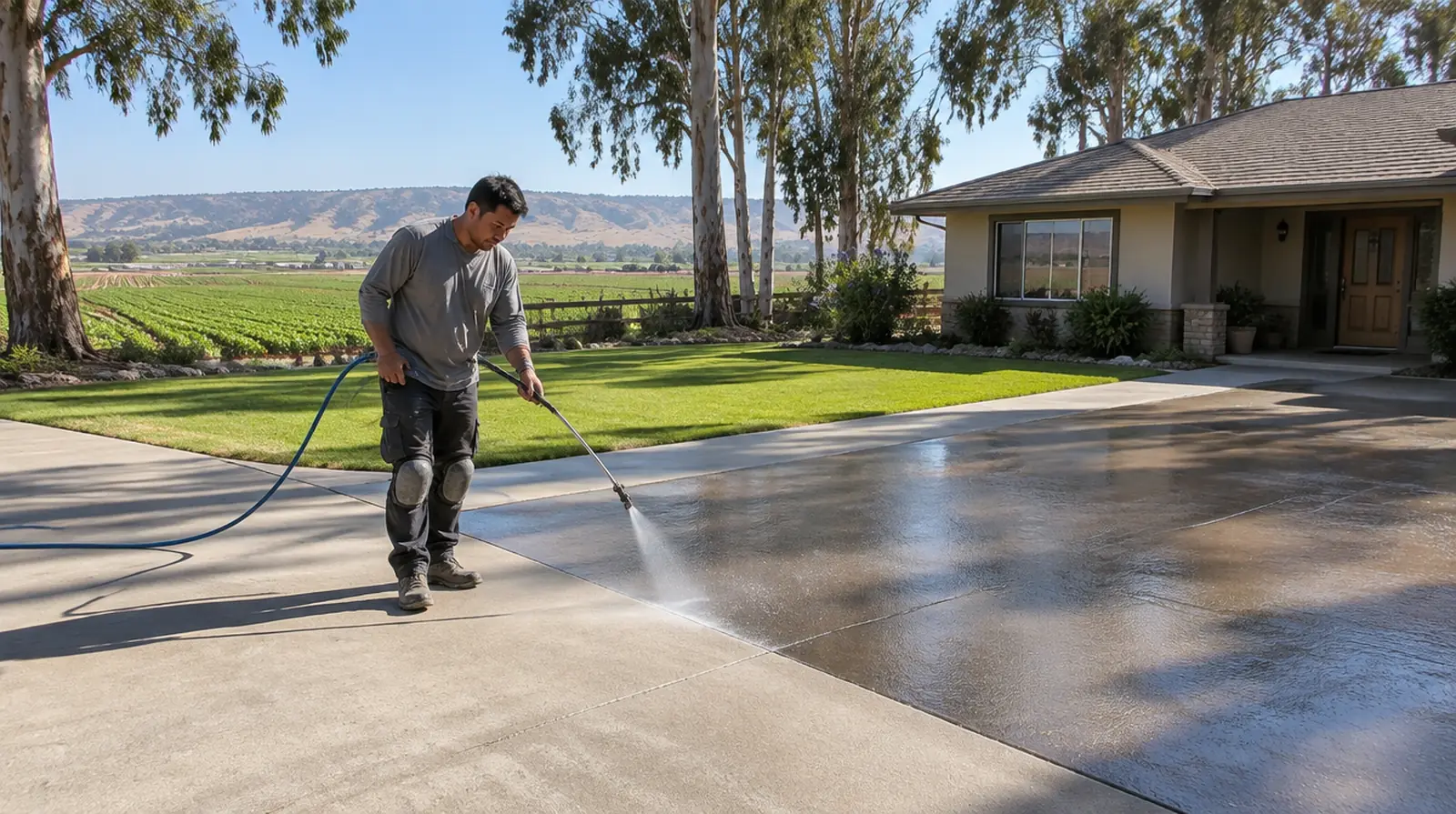
Homes and ranches outside town often have long concrete driveways and turnaround pads. Sealing helps protect them.
Irrigation water
Sprinkler and irrigation overspray leave mineral stains. Sealer helps limit these.
Truck traffic
Farm trucks and trailers drip oil and fluid. Sealed concrete resists staining.
Cleaning
We clean the surface before sealing.
Timing
We schedule dry days.
Next steps
Call for a visit.
Fertilizer and soil stains
Bags and spreaders can leave rust-colored or white marks on concrete. We try to lift these before sealing, though some deep stains may lighten rather than disappear completely.
Wide surfaces, uneven wear
Long driveways rarely wear evenly. Tire paths, turnaround areas and spots near gates take the most traffic. We look at these areas closely and may suggest an extra coat where they see heavy use.
Choosing a sealer
Penetrating sealers keep a natural look and good grip, which suits most rural drives. Film-forming sealers can deepen color but may need more upkeep. We explain both and help you choose.
Wind and dust
Valley wind can blow dust onto fresh sealer. We plan application for calmer parts of the day and keep an eye on the forecast.
Upkeep
Rinse the surface now and then and reseal when water stops beading up.
Gates and cattle guards
Concrete near gates and cattle guards takes extra wear from stopping and turning vehicles. We check these edges for chips and fill them before sealing.
Seal your concrete
Call (805) 362-2565.