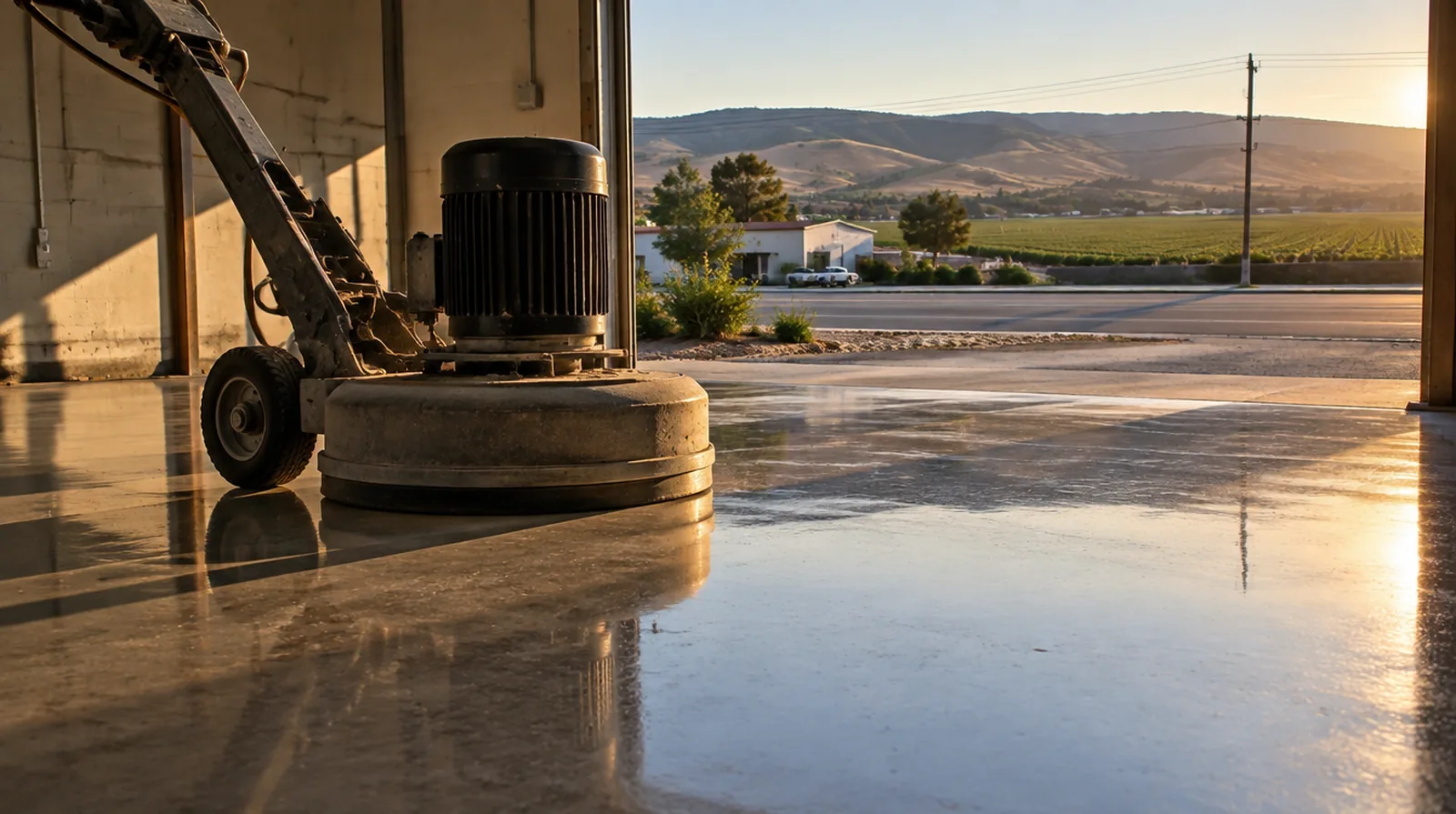
How we polish
Grind, densify, polish through finer diamonds and finish with a guard.
Why it works here
No coating to lift from slab moisture, which matters on damp Valley ground.
Where it fits
Stores, offices, tasting rooms and homes.
How shiny can it get?
From matte to high gloss.
Maintenance?
Dust mop and neutral cleaner.
Tasting rooms
Wineries and tasting rooms around the Valley like polished floors for their rustic, natural look. We can add a stain for warmth.
Homes
Polished concrete with area rugs is comfortable and easy to clean.
Rural shops
Detached equipment shops benefit from a densified, polished slab that resists dust from tractors and trucks.
Polished concrete for the Santa Maria Valley
Polishing turns the slab itself into the finished floor. We grind with progressively finer diamonds, apply a densifier that hardens the surface and then polish to the sheen you pick. There is no film to peel, which is why polished concrete appeals for warehouses, shops, ag buildings and modern homes where people want a clean, industrial look.
What affects the final look
Every slab is different. The amount of stone exposed depends on how deep we grind. A light cream polish keeps the top layer, while deeper grinding reveals aggregate. Old patches, saw cuts and stains will show, so we discuss what to expect up front.
Polished concrete questions
Does it need waxing? No. Regular dust mopping and a neutral cleaner keep it bright, with an occasional burnish in busy areas.
Is it dusty? Densifying hardens the surface and reduces dusting compared with bare concrete.
Can it be done in an occupied home? It is loud and requires clearing rooms, so it is best done during a remodel or before move-in.
Will it stain? A guard product helps, but wine, oil and acids should be wiped up quickly.
Is polishing right for you?
Polish works best on sound, fairly flat concrete without heavy chemical exposure. If your slab has many patches or sees constant fluids, a coating may serve better. We will give an honest recommendation.
Polishing in ag buildings
Packing sheds and equipment barns often have large slabs that are easier to keep clean once polished. Densified concrete resists dusting under forklifts and sweeps quickly. Where fertilizer, oil or acids are present, we may recommend a coating in those zones and polish elsewhere. Large open floors also let us run bigger machines, which keeps the work moving. We plan the job around harvest so equipment is not trapped, and we leave written guidance on cleaning products that will not etch the finish.
Polished floors for farm offices
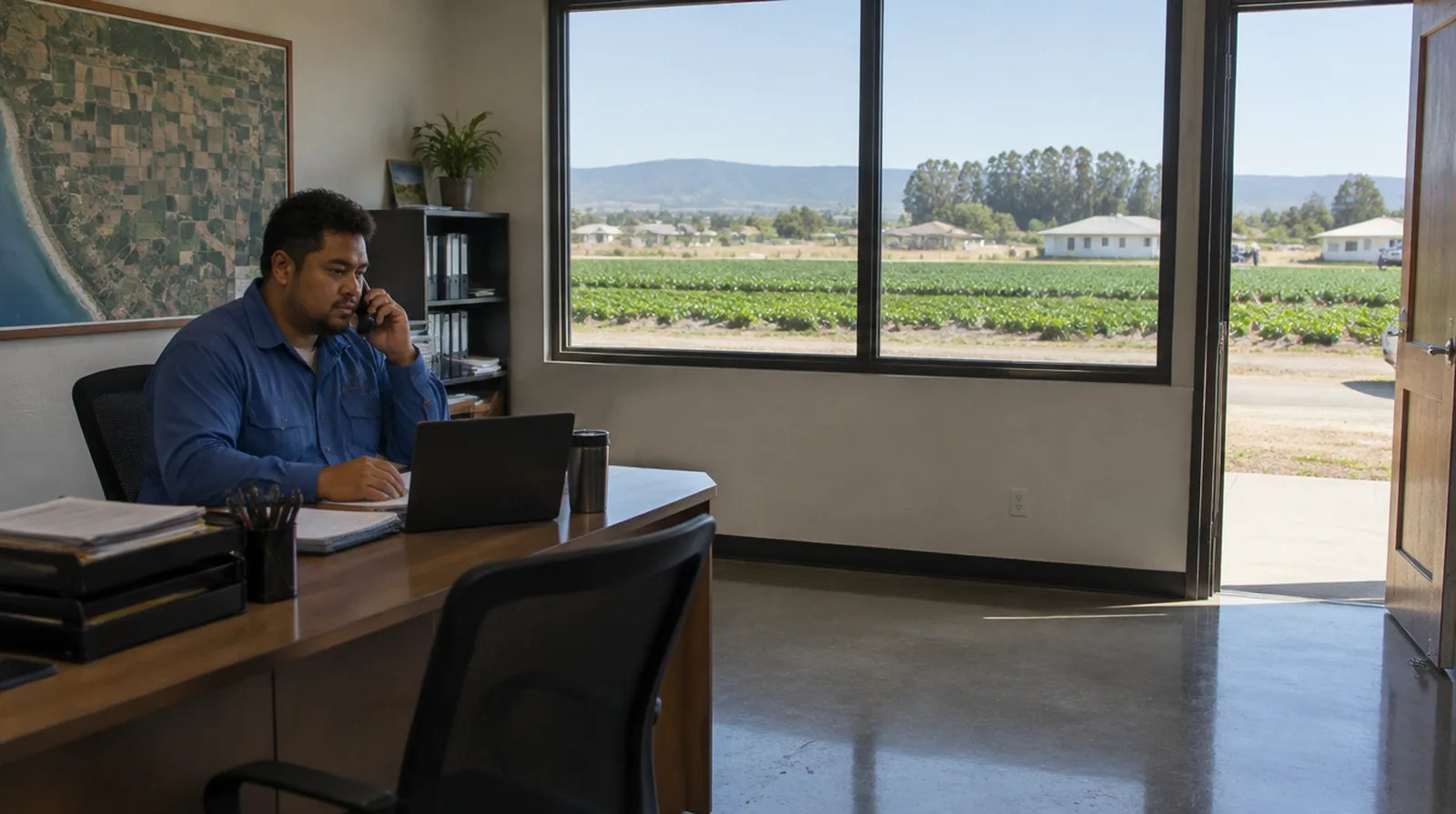
Farm offices, ranch offices and front rooms of ag businesses in the Santa Maria Valley see muddy boots, rolling chairs and visitors. Polished concrete gives these spaces a tidy, professional look.
Dirt from the field
Polished concrete is dense and easy to sweep. Dirt stays on the surface.
Mats at the door
A walk-off mat helps catch grit before it scratches the floor.
Rolling chairs
Office chairs roll easily on polished concrete.
Old slabs
Many farm offices sit on old slabs with patches. Polishing may show these.
Sheen
A satin finish looks clean without glare.
Next steps
Call for a visit.
Mixed-use rooms
Some farm offices double as break rooms, meeting spaces or places to sign paperwork with buyers. Polished concrete suits all of these and does not need waxing or stripping like some floors.
Cleaning routine
Dust mop daily during busy seasons and damp mop with a neutral cleaner as needed. An auto scrubber works for larger rooms.
Working around harvest
Busy seasons leave little time for floor work. We can schedule polishing during slower months or over a weekend so the office stays open when you need it most.
Adding color
If you want the office to feel warmer, a dye in a soft brown or gray can be added during polishing. We bring samples on the visit so you can see them on your own slab before deciding, and we can test a small area in a corner if you want to see it in person.
Ask about polish
Call (805) 362-2565.