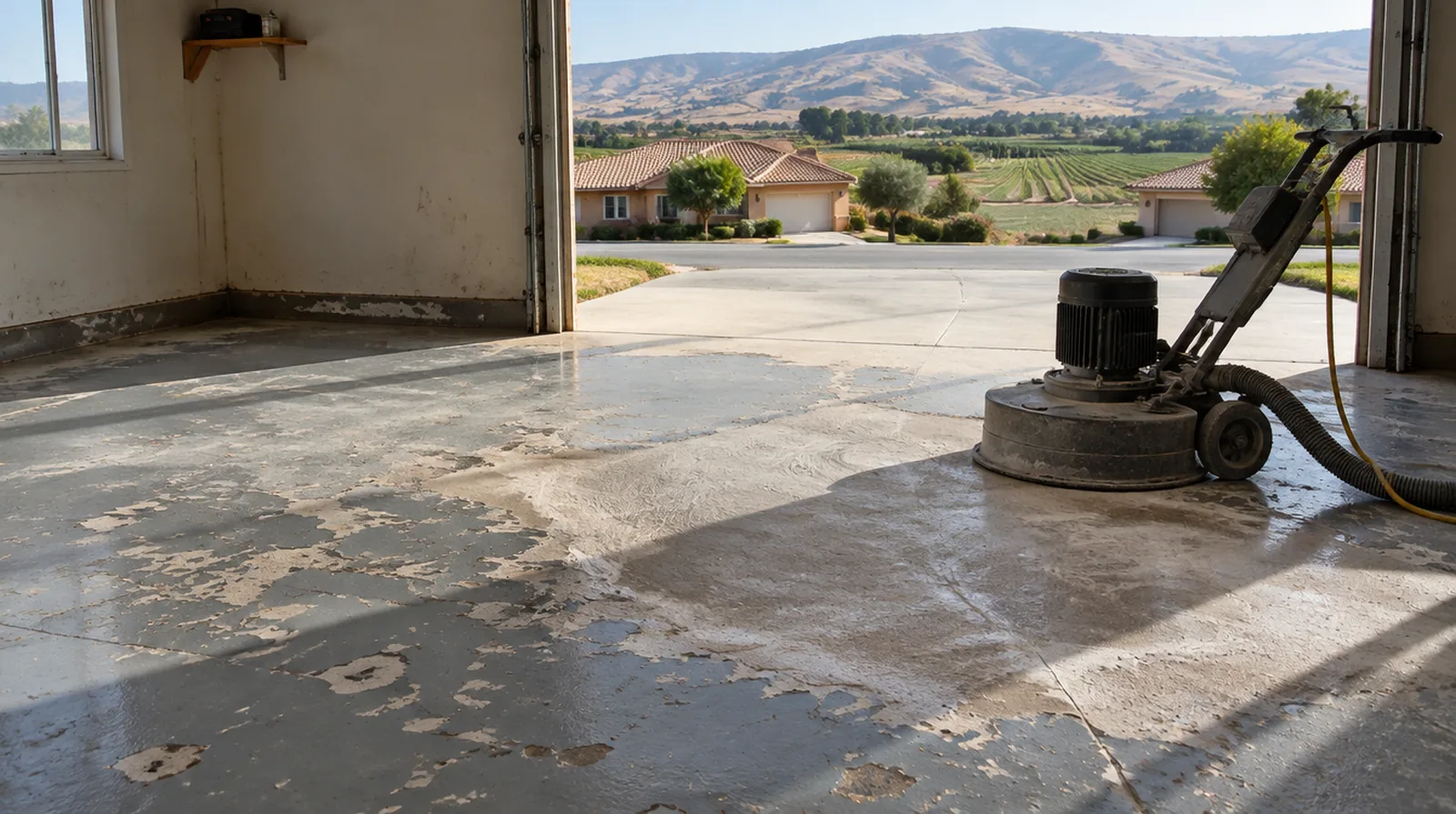
What we fix
Bubbled coatings, peeling paint, worn traffic lanes and chemical damage.
Our method
Test moisture, remove failed coating, grind, apply the right primer and recoat.
Why did my coating bubble?
Often moisture pushing up from below.
Can you fix one area?
Sometimes.
Packing shed repairs
Forklift lanes and wash-down areas wear out first. We repair those zones in the off-season, with fast-cure materials when the window is short.
Garage paint
Store-bought paint peels quickly here because of damp slabs. We remove it and install a proper system.
Cold room damage
Freezer floors take thermal shock every time doors open and wash water hits cold concrete. We repair them with materials rated for those temperature swings, usually during the off-season.
Epoxy floor repair in Santa Maria
Most failed floors we are called to fix share the same story: a coating was rolled onto concrete that was not ground, or onto a slab with moisture coming up, and within a few seasons it started to peel, bubble or lift under hot tires. Repairing those floors starts with finding the reason, because patching over a problem only buys a little time.
How we diagnose a damaged coating
We test adhesion in several spots, look at the underside of loose pieces, and check moisture in the slab. Clean bare concrete on the back of a chip usually means poor prep. Damp, white residue suggests moisture. A sound coating with a few gouges is a simpler fix.
Repair questions
Can you blend a patch into my old flake floor? We try to match chips and colors closely. Older floors yellow a bit, so a fresh clear coat over the whole room helps it look even.
My floor has cracks under the coating. Can those be fixed? We open the cracks, fill them with a repair material and coat over them. Moving cracks can still telegraph through over time.
Is it worth saving a floor that peels everywhere? Usually not. Full removal and a new system is often the better value.
How fast can a commercial repair be done? Small areas can often be handled overnight with fast-cure products.
After the repair
We give you written cure times and simple care steps so the repair lasts.
Fixing a do-it-yourself kit floor
Store-bought kits are thin and often go down on unground concrete. When they peel, we grind off what is left, repair the slab and install a full system. It is more work than a patch, but it ends the peeling for good. We explain the difference in writing so you can decide with clear numbers.
Rebuilding a worn farm shop floor
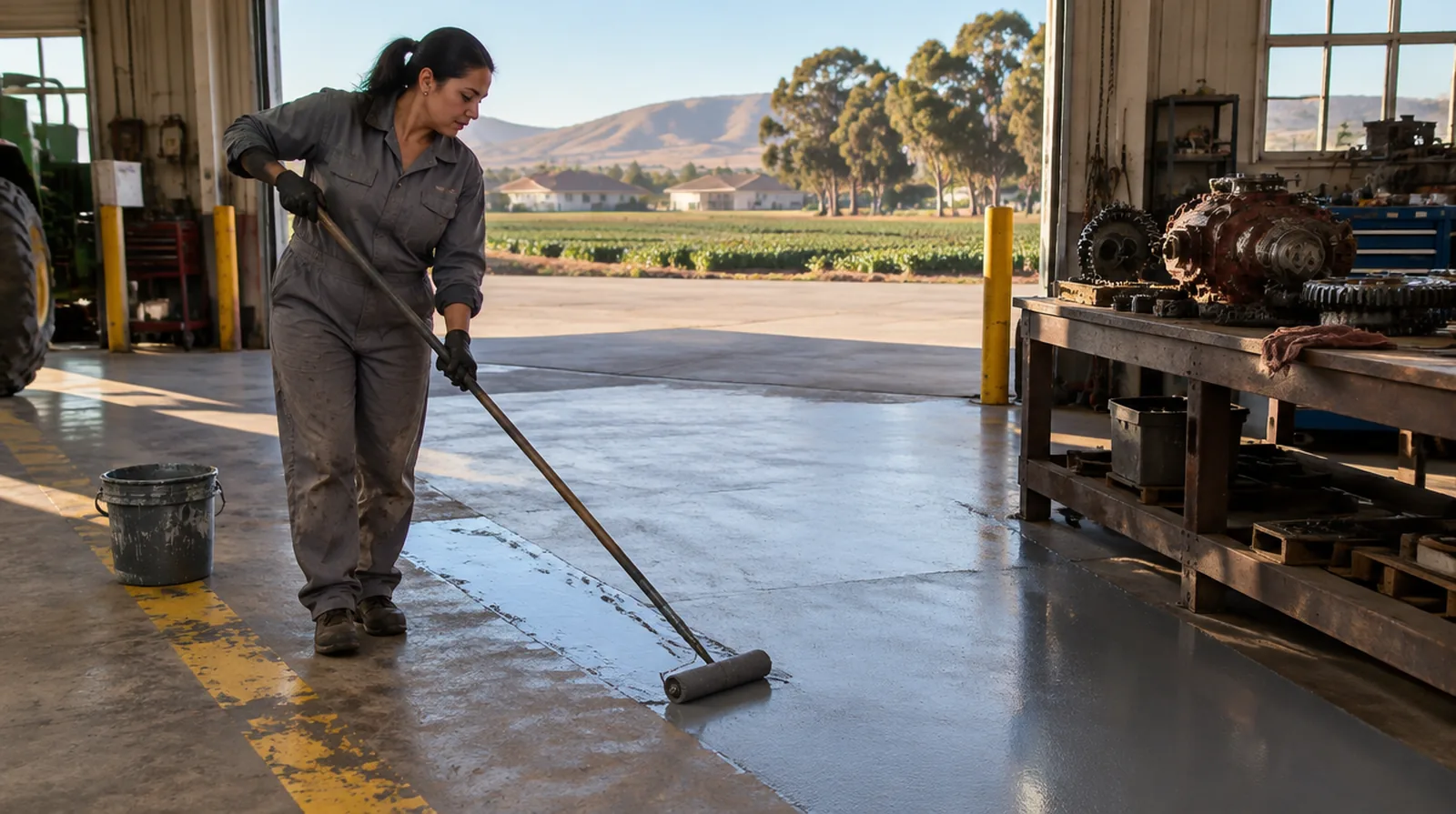
Shop floors on farms and ranches take hard use. Tractor tires, steel tracks, dropped parts and hydraulic fluid wear coatings down.
Common damage
Look for worn traffic paths, chips at the door, and stains from oil and fluid.
Assessing
We check how well the coating is bonded and what caused wear.
Repair options
Spot repairs work for small areas. Full recoats suit heavily worn floors.
Heavier systems
For heavy equipment, a thicker build helps.
Timing
We schedule repairs around the farm calendar.
Next steps
Call for a repair visit.
Cleaning before repair
Oil and hydraulic fluid soak into worn spots. We degrease the floor before grinding so the new coating bonds properly. Badly soaked areas may need extra cleaning steps.
Door edges and aprons
Shop doors take hits from equipment rolling in and out. We rebuild chipped edges and blend them into the floor so tires roll smoothly over the threshold.
Preventing future wear
Rubber mats under workbenches and plywood under jack stands help protect a repaired floor. Wipe up fluid leaks quickly so they do not soften or stain the coating.
Send us photos
Pictures of the worn areas, the door edge and the whole shop help us give rough advice before a visit. Let us know what equipment uses the floor and how often, so we can suggest a system that holds up to it and fits the time you can spare.
Book a repair visit
Call (805) 362-2565.