Why choose flake
Chips add texture for traction, hide wind-blown dust and come in color blends for every home.
Color ideas
Earth tones look natural in Valley homes. Grays and blacks give a modern feel. We can match your house or cabinets.
The process
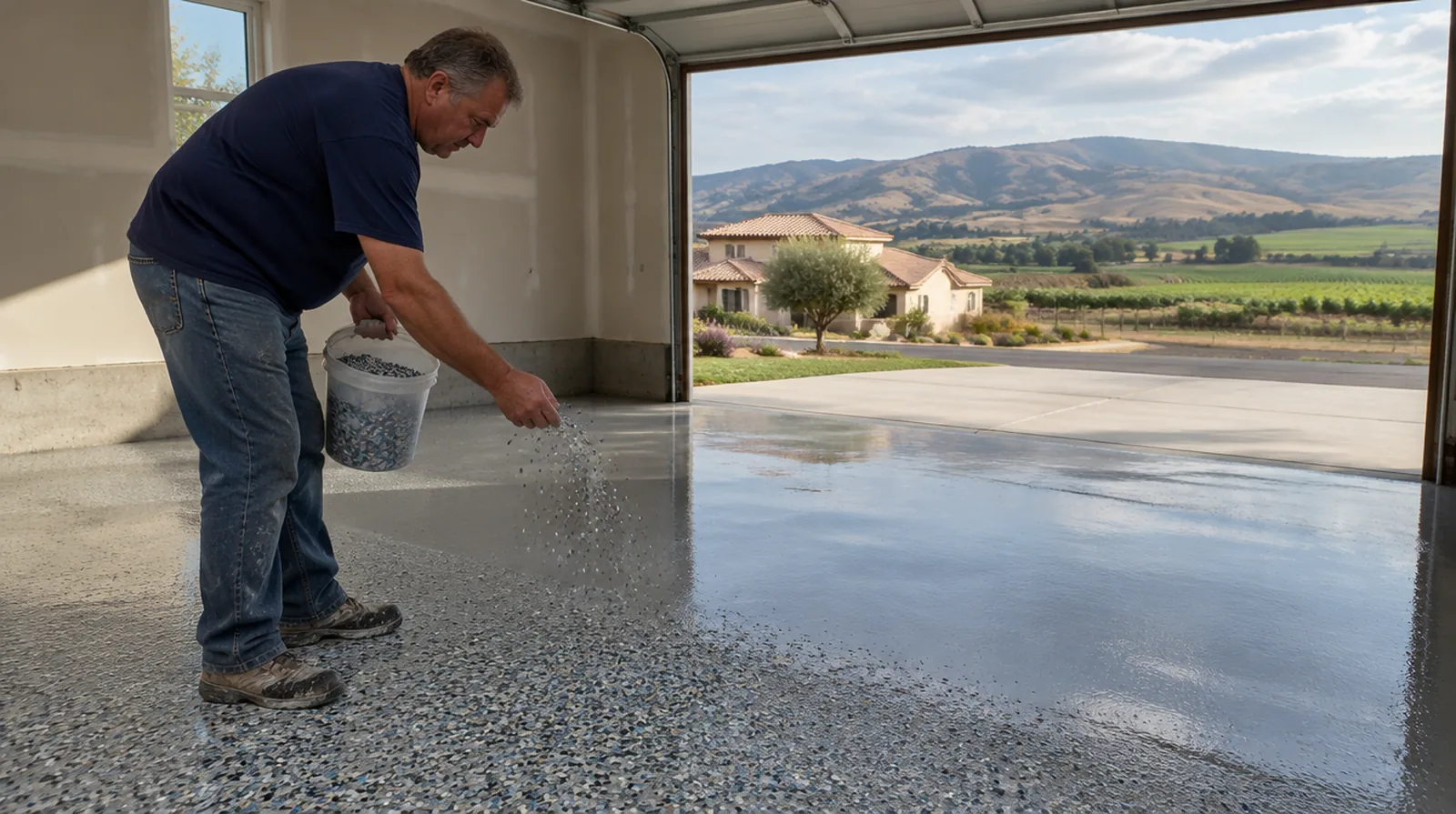
Grind and repair, prime, base coat, chips to refusal, scrape, vacuum, topcoat.
Other rooms
Laundry rooms, mudrooms by the back door, tack rooms and workshops.
How it ages
The topcoat takes the wear, so the chips stay bright. A recoat years later refreshes it.
Is flake good for wet boots?
Yes, the texture helps.
How long to cure?
About a week before parking.
Mudroom entries
Farm families often come in through the garage in muddy boots. A textured chip floor there is easy to hose off.
Epoxy flake flooring in Santa Maria homes and shops
Flake floors are the most common coating we put down in local garages because they hide dust, tolerate a little dirt between cleanings and give tires and boots some grip. The system starts with a ground slab, a base coat, then vinyl chips broadcast across the wet base and sealed under a clear top. The chips give texture and color variation, so small scuffs and the fine sand that drifts in from the dunes do not jump out at you.
Choosing a chip size
Larger chips read as bold and speckled, popular in workshops and big garages. Smaller chips create a tighter, more even look that suits laundry rooms and finished storage. We bring sample boards so you can see both in your space.
Flake floor questions
Can flake go in a laundry room inside the house? Yes. Many owners extend the coating from the garage through the laundry so the floor looks continuous.
Is it cold underfoot? It is about as cool as bare concrete. Area rugs work fine on a cured floor.
Will a full broadcast feel rough? The clear top smooths it. We can adjust the top coat for more or less texture.
How do I clean it? Sweep or use a leaf blower, then mop with mild soap. Avoid harsh acids.
Good fits beyond the garage
Back patio rooms, pool equipment rooms, home gyms and small retail backrooms all suit flake. It is forgiving, easy to repair in small sections and comes in many blends.
Colors that hide valley dust
Tan, gray and mixed earth blends hide the fine dust and sand that blow in on windy afternoons. Pure white or black chips show everything, so we usually steer people toward a blend with a few tones mixed in.
Flake floors near the grill and smoker
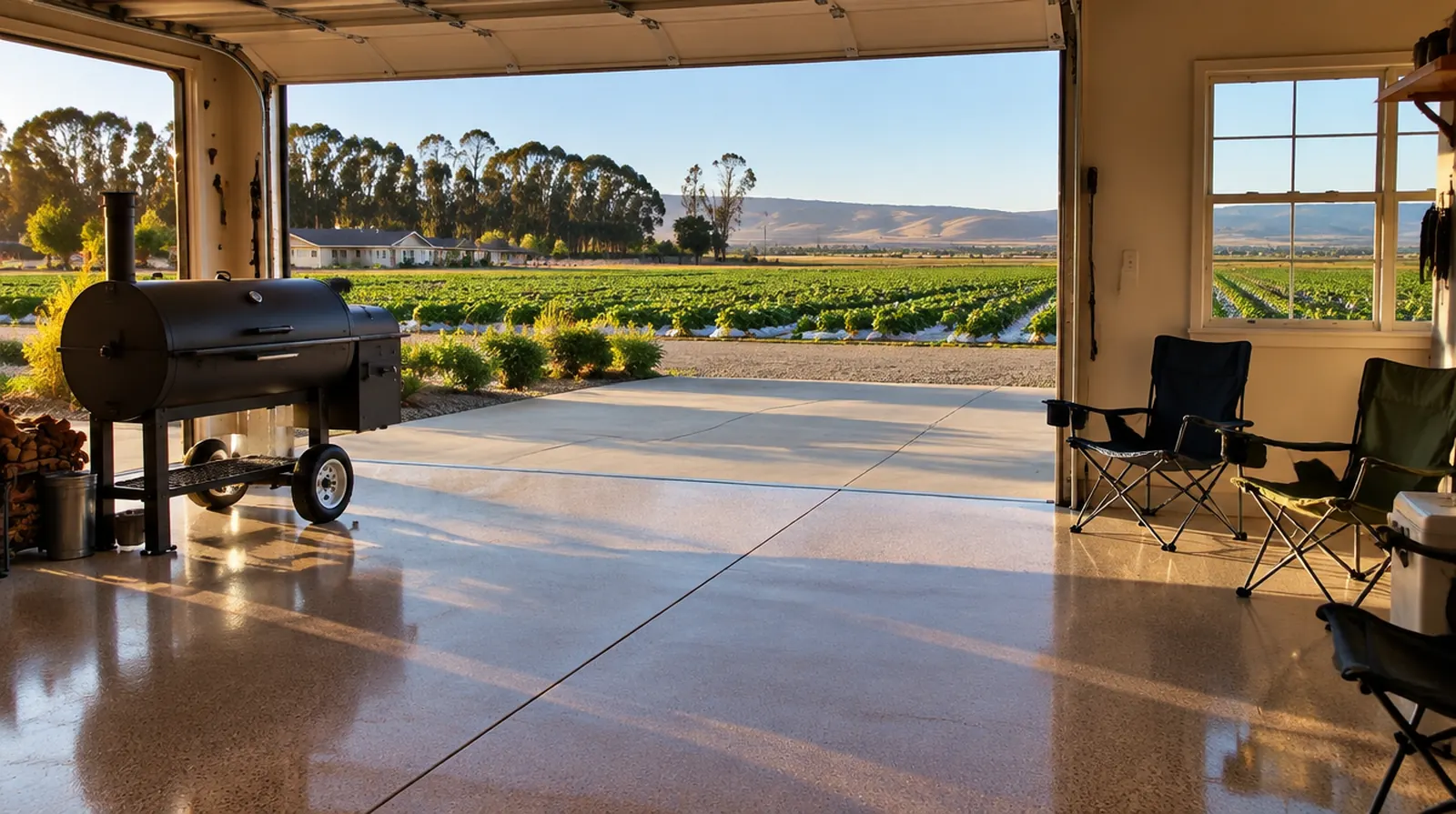
Santa Maria-style barbecue is a local tradition, and many homeowners keep a grill or smoker just inside or outside the garage door. That area sees grease, charcoal ash and heat, and a flake floor holds up well when it is set up right.
Grease drips
Fat and marinade drips sit on top of a sealed floor instead of soaking in. Wipe them up after a cook with warm water and a mild degreaser.
Ash and charcoal
Charcoal dust and ash sweep up easily. A darker or mixed chip blend hides any light gray haze between cleanings.
Heat and grill mats
Never set hot grates or coals directly on the floor. A heat-resistant grill mat under the cooker protects the coating and catches drips.
Keep it ventilated
Always cook outside or with the garage door fully open for airflow. Move the grill back in only after it cools.
Choosing a blend
Browns, tans and grays tend to hide the occasional smudge. We bring samples so you can pick one that suits your space.
Prep tables
If you trim meat or prep sides in the garage, a sealed floor makes cleanup simpler.
Ready for the next cookout
Give the floor its full cure time before rolling the grill back in. We will tell you the timing for your system.
A few minutes of cleanup after each cook keeps the floor looking as good as the day it went down.
Choose a blend
Call (805) 362-2565.